
Why does my colour match look right in the workshop but wrong on site?
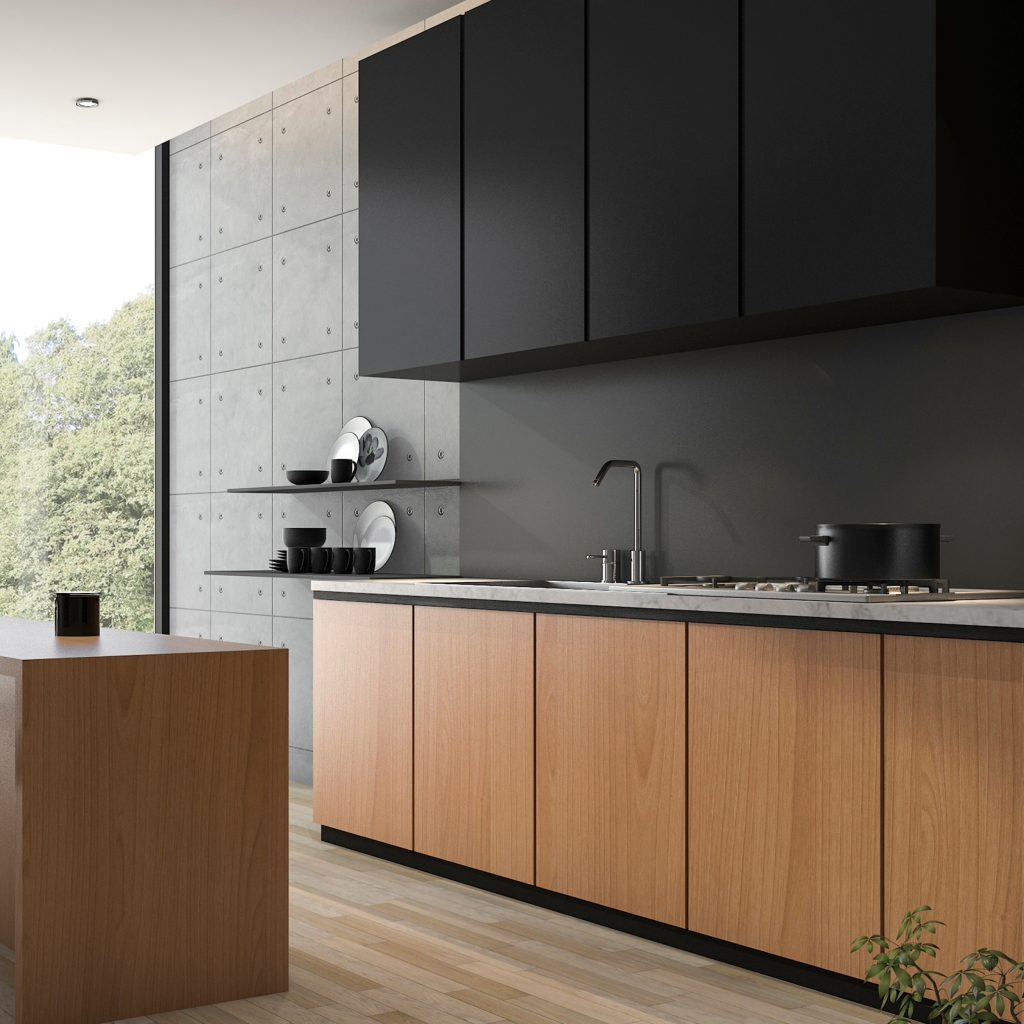
You match a finish to a client’s existing furniture. The sample looks spot on under the workshop lights and gets signed off. Then the piece is fitted, the client turns on the kitchen downlights, and suddenly it’s a shade out. Nobody has made a mistake with the mix. What you’re seeing is almost certainly metamerism.
This article explains what metamerism is, why wood finishes are especially prone to it, and what you can do to reduce the risk before a match reaches site.
What is metamerism?
Metamerism is when two colours match under one light source but not under another.
Every finish reflects light in its own pattern across the spectrum, a kind of colour fingerprint. Two finishes made with different colourants can have different fingerprints but still look identical under one particular light. Change the light and the difference appears. The two samples are called a metameric pair.
The key point is that the match was never truly identical. It only looked identical under the conditions it was judged in.
Why does metamerism happen so often with wood finishes?
Wood finishing stacks up several of the things that cause it:
- Different colourants. If you’re matching a finish that was made with a different pigment or dye system, you can get the same visual colour from a completely different recipe. That’s the classic cause.
- The timber itself. With stains and translucent finishes, the wood is part of the colour. A different species, or even a different board of the same species, changes the result.
- Layered systems. Stain, sealer and topcoat each affect how light is reflected, so a match judged at stain stage can shift once the full system is on.
It’s also worth knowing what isn’t metamerism. A difference in sheen, an old lacquer that has yellowed, or timber that has darkened in sunlight will all make a match look wrong, but under every light, not just some. If a mismatch shows up in all lighting, look at those causes first.
Which lights cause the biggest problems?
The trouble usually comes from moving between these three types of light:
- Daylight. Cool, bright and fairly even across the spectrum. Light booths use a daylight simulator known as D65.
- Warm artificial light. Warm white LEDs, halogen and older incandescent bulbs. Common in kitchens, living rooms and under-cabinet lighting.
- Workshop and retail lighting. Cool fluorescent tubes and many LED high-bays. TL84 is a fluorescent standard widely used in UK retail.
Many workshops are lit very differently from the room the finished piece ends up in, which is exactly why a match approved at the bench can fail on site. Cheaper LEDs can make things worse, because they render some colours poorly.
How do you check a colour match properly?
- Check under at least two different light sources, ideally daylight and a warm light. If you know how the final room is lit, check under that too.
- If you do regular matching, a light booth with switchable sources makes this quick and repeatable.
- A spectrophotometer can measure a sample and flag a likely metamerism problem before anyone sees it on site, but the final check should still be by eye.
- Judge the sample dry, with the full system applied and at the final sheen. A wet or part-finished sample will mislead you.
- View both samples side by side, at the same angle and distance.
How do you reduce the risk when matching existing furniture?
- Ask where the piece will live and how the room is lit before you start.
- Make the sample on the same species, prepared the same way, sanded to the same grit.
- Build the full finishing system on the sample, not just the colour coat.
- Where you can, match with colourants similar to the original. The closer the recipe, the less the match will drift between lights.
- Get a physical sample signed off under the agreed lighting and keep a record of it.
Can metamerism be eliminated completely?
Not always. The only way to guarantee a match under every light is to use the same colourants as the original, and when you’re matching an old or unknown finish, you usually can’t know what those were.
What you can do is keep it to a minimum and agree with the client which lighting matters most. That five-minute conversation before the work starts is far cheaper than a remake after the piece is fitted.
Frequently asked questions
Is metamerism the same as fading?
No. Fading and yellowing are changes to the finish itself over time. Metamerism is a difference that appears and disappears as the light changes.
Why do two people disagree about whether a colour matches?
Colour vision varies slightly from person to person, so two people can genuinely see a pair of samples differently. This is sometimes called observer metamerism. Standardised lighting helps, but it can’t standardise the eye.
Does sheen affect a colour match?
Yes. A higher gloss usually looks darker and richer than the same colour in matt. That isn’t metamerism, but it’s a common reason for a match to fail, so always match the sheen as well as the colour.
What light should I use to approve a sample?
The light it will be seen under. If you don’t know, check it in daylight and under a warm white light before sign-off.
Struggling with a colour match that won’t hold?
Send us your sample, tell us where the piece is going and how it’s lit, and we’ll help you get the finishing system right before it goes to site.
Call: 02392 233310
Email: [email protected]