
Wood Coatings for the Yacht and Marine Industry: What UK Manufacturers Need to Know
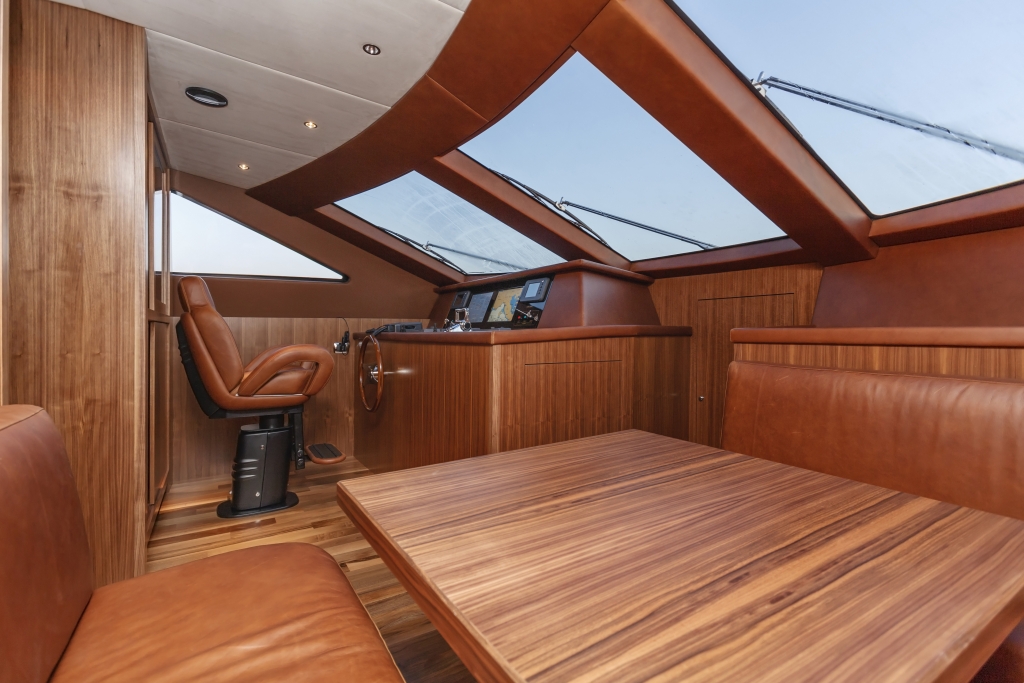
Whether you manufacture joinery and furniture for superyachts, fit out the interiors of cruise liners or produce cabinetry for the leisure boat market, the coatings you specify matter more than in almost any other interior environment. The challenges are real: UV radiation through cabin glazing, high humidity, condensation and the exacting quality expectations of the marine sector. The good news is that the products that meet these demands are the same professional interior lacquer systems used in the finest commercial furniture and joinery manufacturing. What sets them apart for marine use is not a different product category but specific product characteristics: acrylic chemistry, UV protection capability and, for passenger vessels, IMO certification.
This guide sets out what UK manufacturers need to understand about wood coatings for the marine sector and what to look for when specifying a system.
The Marine Interior Environment: What Your Coatings Are Up Against
The interior of a yacht or cruise liner is a demanding environment for a wood finish. It is not that the coatings chemistry is fundamentally different to what a furniture manufacturer or joinery shop would use. It is that the conditions in which that finish will perform are more challenging than most.
Humidity is the most persistent challenge. The marine environment generates elevated ambient humidity below decks and condensation on cooler surfaces is commonplace. A lacquer that cannot accommodate the natural movement of timber as it responds to moisture cycling will crack or delaminate over time.
UV exposure through cabin glazing is a significant and often underestimated factor. Standard window glass blocks most UVB but transmits UVA freely and a south-facing cabin in warm latitudes can expose interior timber surfaces to levels of UV comparable to outdoor joinery. The result, particularly on pale veneers, is colour shift and degradation of the coating film.
Mechanical wear is constant. Cabin soles, saloon tables, galley worktops, helm surrounds and handrails are all in daily use. The finish must maintain its appearance and protective function under regular contact, abrasion and cleaning with marine-grade products.
None of this requires a separate category of “marine coating”. It requires the right specification of a professional interior lacquer system, correctly matched to the substrate and the performance demands of the application.
Key question for manufacturers
Before specifying any coating for a marine interior application, ask: what is the function of this surface and what will it be exposed to? A cabin sole needs abrasion and moisture resistance. Saloon joinery in a well-glazed deck saloon needs UV stability and resistance to colour shift. A galley worktop needs chemical resistance. Getting the specification right starts with understanding the surface, not reaching for the first tin labelled for marine use.
Why Acrylic Chemistry Is the Right Starting Point for Marine Interiors
The single most important product decision for marine interior finishing is resin chemistry. Specifically, the difference between alkyd-based and acrylic-based lacquers.
Many conventional PU lacquers on the UK market are alkyd resins cured with an isocyanate hardener. Alkyds amber with age and UV exposure. Over dark oak or walnut this is barely noticeable. Over the pale veneers commonly used in yacht and cruise liner interiors, maple, sycamore, ash and birch in particular, the ambering compounds rapidly with the natural yellowing of the wood itself. The result is a finish that looks noticeably yellow within months on south-facing or heavily glazed surfaces.
Acrylic-based lacquers are inherently water-white and light-stable. Acrylic resin does not amber with age or UV exposure, whether it comes as a solvent-based acrylic PU or a waterborne acrylic dispersion. This matters in practice because it means the coating is not adding its own yellowing on top of the natural colour shift of the veneer. Every solvent PU lacquer in the Redwood range is acrylic-based, not alkyd, for exactly this reason.
This is also why ‘water-based yellows less’ is true in practice but for the wrong reason. It is not the water doing the work. It is the acrylic resin chemistry, which is the dominant binder in most waterborne lacquers. A water-based lacquer with an alkyd resin would amber just as much. A solvent-based acrylic PU does not.
What to check when specifying
Ask your supplier a direct question: alkyd or acrylic? Many product data sheets use ‘PU lacquer’ without specifying the base resin. If your supplier cannot answer, that is itself useful information. For pale veneer surfaces in marine interiors, acrylic chemistry is not optional. It is the correct starting specification.
UV, Veneer Yellowing and What You Can Realistically Do About It
UV exposure through cabin glazing is one of the most significant challenges for interior timber finishes on vessels, particularly on the pale veneers commonly specified in yacht and cruise liner interiors: maple, sycamore, ash and birch.
Standard window glass transmits UVA freely and a south-facing cabin can expose interior timber to UV levels comparable to outdoor joinery. The result is lignin breakdown in the wood and, if the lacquer chemistry is alkyd-based, additional ambering from the coating itself. Acrylic-based lacquers stay water-white and do not contribute to yellowing, and UV absorber and HALS additives are available for both our acrylic PU and water-based systems to further slow colour shift on vulnerable surfaces. These should be treated as standard practice on pale veneers, not optional extras, and client expectations should be set in writing at quotation stage.
For a more comprehensive explanation of why light veneers yellow, which species are most vulnerable and what UV additives can and cannot achieve, see our article Why Is My Light Veneer Turning Yellow?
IMO Certification: Why It Matters for Passenger Vessel Work
For manufacturers supplying joinery, furniture or fit-out components destined for passenger vessels, including cruise liners, ferries and larger commercial yachts carrying passengers for hire, IMO certification is not a technical nicety. It is a contractual and regulatory requirement.
What IMO certification means
The International Maritime Organization sets international standards for fire safety on passenger ships. Under the IMO’s SOLAS (Safety of Life at Sea) convention, interior surface finishes on passenger vessels are required to meet specific fire performance criteria. In practice, this means that lacquers and coatings applied to interior timber surfaces must be tested and certified to the relevant IMO resolution, currently IMO Resolution MSC.307(88), which adopts the 2010 Fire Test Procedures (FTP) Code.
For surface finishes, the fire test itself is carried out under Annex 1, Part 5 of the FTP Code, which assesses surface flammability, and approved products must also meet the smoke and toxicity requirements of Part 2. Products that pass are type-approved under the Marine Equipment Directive as surface materials with low flame-spread characteristics (item MED/3.18b) and carry the wheelmark of conformity, together with a US Coast Guard approval number under the EU-US mutual recognition agreement. This documentation can be cited in the package submitted to flag state authorities and classification societies for vessel approval.
Why it is a genuine differentiator
Not all interior lacquers carry IMO certification. Standard furniture lacquers, even high-quality professional products, are not routinely submitted for IMO fire testing because the furniture market does not require it. A manufacturer supplying into the passenger vessel sector who specifies a non-certified product faces two risks: the fit-out fails to gain classification society approval or the product has to be stripped and reapplied at significant cost.
A large number of products in the Redwood range carry IMO certification, covering both water-based and two-component acrylic PU systems. This means manufacturers can specify from our range with confidence that the documentation required for passenger vessel approval is available and that the coating performance in fire testing has been independently verified.
Practical implications for manufacturers
- Always confirm IMO certification status before specifying a lacquer for any passenger vessel application
- Request the IMO fire test certificate from your supplier, not just a product data sheet reference to compliance
- Be aware that IMO certification applies to a specific product formulation and application method; deviating from the tested system, for example by using a different hardener, changing the mixing ratio or exceeding the approved application weight, may invalidate the certification
- For complex fit-out projects, Redwood’s technical team can advise on building a certified system from primer through to topcoat and supply the documentation needed for classification
Coating Types for Marine Interior Applications
The products used in marine interior manufacturing are professional interior wood lacquers, the same range used in furniture manufacturing, shopfitting and high-specification interior joinery. What follows is a guide to the types available and where each fits in a marine interior context.
1. Two-Component Acrylic PU Lacquers
Two-component acrylic polyurethane lacquers are the workhorse of high-performance interior finishing in both the marine and furniture sectors. They consist of a base lacquer and an isocyanate hardener, mixed immediately before application in a precise ratio. Once cured, the film is hard, durable and resistant to moisture, abrasion and the cleaning agents used in marine environments.
The acrylic base resin, as discussed above, means these products are inherently water-white and light-stable. For pale veneers, light-stained finishes and the high-gloss brightwork expected in yacht and cruise liner interiors, two-component acrylic PU is the specification that delivers the combination of clarity, durability and UV stability the market demands.
Many two-component acrylic PU systems in the Redwood range carry IMO certification, making them directly suitable for passenger vessel applications without requiring additional testing or qualification.
2. Water-Based Acrylic Lacquers
Water-based acrylic lacquers offer a lower-VOC alternative to solvent PU systems with no meaningful compromise on colour stability. Modern formulations have reached a standard of performance, in terms of clarity, hardness and moisture resistance, that makes them genuinely viable for marine interior applications where a solvent system would previously have been specified as default.
The practical advantages in a marine manufacturing context are considerable. Applying solvent-heavy coatings in enclosed boat interiors or below-deck fit-out spaces exposes operators to significantly higher concentrations of solvent vapour than equivalent work in an open factory. Water-based systems substantially reduce this risk and simplify COSHH compliance.
UV additives are available for water-based systems in the same way as for solvent PU, meaning the UV protection benefits described above are equally accessible in a waterborne formulation. Water-based options in the Redwood range include IMO-certified products.
3. Oils and Hardwax Oils
Penetrating oils and hardwax oils remain popular for certain interior marine surfaces, particularly teak cabin soles, saloon tables and hardwood furniture elements. Oils penetrate into the wood rather than forming a surface film, which means they do not crack or peel as the substrate moves with humidity cycling. The trade-off is lower protection levels and more frequent maintenance than a lacquer system provides.
Modern hardwax oil formulations offer improved durability and water resistance compared to traditional teak oils, and their maintenance characteristics suit the marine sector well: a maintenance coat can be applied without stripping the existing finish, which suits vessels on charter cycles.
4. Stains and Primers
Interior wood stains allow manufacturers to achieve consistent colour across joinery runs and to unify variation within timber species, important in production boat manufacturing where multiple panels must match. Stains are applied under a clear lacquer topcoat, retaining the appearance of natural wood grain while delivering consistent colour.
Primers and sealers are the foundation of any coating system. In marine interior applications, the correct primer is determined by the substrate: adhesion primers for oily hardwoods such as teak and iroko, grain-filling sealers for open-grain species such as oak and ash, and tannin-blocking primers to prevent bleed-through on high-tannin timbers. The primer stage is where the durability of the final system is largely determined.
Marine Interior Coating Types at a Glance
| Coating Type | Best For | Key Strength | Key Consideration |
| 2-part acrylic PU lacquer | Cabin joinery, panels, high-gloss surfaces | Water-white, durable, UV-stable; IMO-certified options available | Precise mixing ratio required; demanding application |
| Water-based acrylic lacquer | General interior trim and joinery | Low VOC; safe in enclosed spaces; good clarity; IMO-certified options | Requires controlled temperature and humidity |
| Hardwax oil / penetrating oil | Teak soles, saloon tables, hardwood furniture | No cracking or peeling; easy on-vessel maintenance | Lower protection; more frequent re-application |
| Interior stain | Colour matching and unifying joinery runs | Consistent colour; retains wood grain appearance | Requires compatible clear topcoat over the top |
| Primer / sealer | All bare timber before topcoat | Adhesion, grain control, tannin blocking | Must be matched to substrate and topcoat system |
Substrate Considerations for Marine Interior Applications
The wood species and substrate type used in marine interior manufacturing has a significant bearing on the correct primer and coating system. UK manufacturers in this sector typically encounter the following:
Teak and Iroko
Both teak and iroko are widely used in marine interiors for their natural durability, oil content and appearance. That same oiliness presents a challenge for coating adhesion. The substrate must be degreased immediately before coating and an adhesion primer specifically formulated for oily hardwoods must be used. This preparation step is non-negotiable: it is the most common cause of adhesion failure on teak and iroko.
Pale Veneers: Maple, Sycamore, Ash and Birch
These species are widely specified in high-end yacht and cruise liner interiors for their clean, contemporary appearance. They are also the most vulnerable to UV-driven colour shift, as discussed above. The specification for pale veneer surfaces should always include acrylic-based lacquer chemistry and UV absorber/HALS additive as standard. Client expectation management at quotation stage is also essential.
Oak and Ash
Oak and ash are popular for interior joinery in traditional and contemporary marine builds. Both are open-grained timbers that benefit from a grain-filling sealer before lacquering. High tannin content in oak can cause bleed-through into light-coloured topcoats, requiring a tannin-blocking primer.
Marine Plywood and MDF
Marine-grade plywood is widely used in boat building and interior fit-out for its dimensional stability and waterproof adhesive construction. Face veneers are typically thin and coating systems must be selected carefully to avoid grain raise. MDF is increasingly used in production boat interiors for painted joinery; edges are highly porous and require additional primer coats to achieve a smooth finish. Water-based systems applied too heavily in a single coat can raise the face on MDF and should be trialled before committing to production.
VOC Compliance and Sustainability
Regulatory requirements around VOC emissions affect all industrial coating operations in the UK, including those working in marine manufacturing. Under UK legislation, which retains and builds on the framework of the EU Industrial Emissions Directive, manufacturers using solvent-based coatings above certain consumption thresholds may require permits with emission limit conditions.
The shift towards water-based acrylic systems addresses this compliance obligation directly. For manufacturers working in enclosed or semi-enclosed environments, such as boat interior fit-out, the case for water-based products is particularly strong: dramatically lower VOC exposure for operators, simplified COSHH assessment, reduced fire risk and lower solvent disposal costs, with no meaningful compromise on finish quality.
Redwood is ISO 14001 registered and has committed to reducing its own greenhouse gas emissions by 50% by 2030 as part of the SME Climate Commitment. We can supply VOC content data and environmental product documentation to support customers’ own sustainability and compliance reporting.
Selecting the Right Coating System: A Step-by-Step Approach
Choosing a coating system for marine interior work follows the same structured approach as any professional interior application, with a small number of additional checks specific to the sector.
Step 1: Define the Surface and Its Function
A cabin sole requires maximum abrasion and moisture resistance. Saloon joinery in a well-glazed deck saloon needs UV stability and resistance to colour shift. A galley worktop must resist heat, spills and cleaning products. A painted locker interior needs a light-reflective finish that is easy to apply and re-coat. Define the functional requirement before selecting any product.
Step 2: Is This a Passenger Vessel Application?
If the joinery or furniture is destined for a vessel carrying passengers for hire, including cruise liners, ferries and charter yachts above a certain size, IMO certification of the coating system will be required. Confirm this with the project specifier or shipyard before selecting a product and ensure the complete system, primer through topcoat, is covered by the certification documentation.
Step 3: Identify the Substrate and Specify the Primer
The wood species and substrate type determine primer selection before any other coating decision is made. Oily hardwoods need adhesion primers. Open-grain species need grain-filling sealers. High-tannin species need tannin blockers. Pale veneers need an acrylic-chemistry topcoat with UV additive as standard. Always specify the primer for the substrate, not for the topcoat.
Step 4: Confirm the Chemistry for the Surface Tone
For pale, white-stained or light-toned surfaces, confirm that the specified lacquer is acrylic-based, not alkyd. Add UV absorber and HALS additive as standard. Document at quotation stage that light-exposed natural timber changes colour over time and that the specified system will slow but not prevent this.
Step 5: Assess VOC Position
Review the VOC content of the system you are considering. If you are working in enclosed spaces or seeking to reduce overall solvent use, assess whether a water-based alternative is viable for this application. Redwood’s technical team can advise on equivalent water-based and solvent PU options within the range.
Step 6: Trial and Validate
Before committing a new coating system to production, trial it on representative substrates. Pay particular attention to adhesion on oily hardwoods, grain-raise on MDF and thin veneers, and colour consistency across batches. Redwood supports manufacturers through trialling with on-site technical visits and product samples.
Application: Getting the Best Results
The principles of good application are the same as for any professional interior finish, with a few considerations particular to the marine context.
Surface Preparation
Surface preparation is the single most important determinant of finish quality and durability. Old coatings that are poorly adhered or degraded must be removed before recoating. On oily hardwoods, degrease with a suitable wipe immediately before coating and do not allow the surface to stand after degreasing. Sanding between coats with the correct grit sequence is standard practice for all interior lacquer systems.
Number of Coats and Film Build
Interior lacquer systems require adequate film build to provide moisture resistance and durability. The coat specification, sealer or primer plus the correct number of topcoats, should follow the product manufacturer’s recommendation for the substrate and performance level required. Production environments should confirm the coat specification with Redwood’s technical team for each product and substrate combination.
Environmental Conditions
Temperature and humidity at the point of application affect cure, flow and final finish quality. Most water-based interior lacquers should be applied above 10 degrees Celsius and below 80% relative humidity. For fit-out work in enclosed boat interiors, managing the application environment is particularly important. Fluctuating temperatures and high humidity are the most common cause of finish defects on water-based systems in this context.
Spray Equipment
For manufacturers applying coatings in a production environment, the right spray equipment makes a significant difference to material efficiency and finish quality. High-quality spray guns with the appropriate tip and air cap for the product viscosity will maximise transfer efficiency and minimise waste. Redwood supplies Sagola spray guns and Elcometer pumps, both well-suited to interior lacquer applications in marine manufacturing.
Frequently Asked Questions: Wood Coatings for Marine Interiors
The following questions cover the topics we most commonly discuss with manufacturers entering or developing their marine interior coating capability.
| Do I need a special marine lacquer for yacht or cruise liner work? | No. The lacquers used in yacht and cruise liner interiors are the same professional interior wood lacquers used in high-specification furniture and joinery manufacturing. What matters is selecting the right product characteristics for the application: acrylic chemistry for colour stability, UV additives for light-exposed surfaces, and IMO certification for passenger vessel work. |
| Why does acrylic chemistry matter for marine interiors? | Acrylic resin is inherently water-white and does not amber with age or UV exposure. Alkyd-based PU lacquers, which are common in the market, add their own yellowing on top of the natural colour shift of the wood. For pale veneers, which are widely used in marine interiors, an alkyd-based system can produce visible yellowing within months. All solvent PU lacquers in the Redwood range are acrylic-based. |
| What is IMO certification and do I need it? | IMO certification confirms that a coating product has passed fire performance tests under the International Maritime Organization’s Fire Test Procedures (FTP) Code – tested for surface flammability under Annex 1, Part 5, and meeting the smoke and toxicity requirements of Part 2. It is required for any coating applied to interior surfaces on passenger vessels, including cruise liners, ferries and charter yachts. Without it, the fit-out cannot gain classification society approval. A number of products in the Redwood range carry IMO certification across both water-based and two-component acrylic PU systems. |
| Can UV additives stop veneer yellowing on a yacht interior? | They significantly delay it, but cannot prevent it entirely. UV absorbers intercept incoming UV radiation before it reaches the wood, and HALS additives neutralise destructive radical reactions in the coating. Between them, on a vulnerable pale veneer, they can turn a problem that appears in months into one that takes years. What they cannot do is permanently block all UV through a clear film. On pale surfaces, UV additives should be treated as standard, not optional, and clients should be told in writing that natural timber changes colour with light exposure. |
| Which veneers are most at risk from UV in cabin glazing? | Pale, low-extractive species: maple, sycamore, birch, ash and beech, and anything white-stained, bleached or lime-washed. Standard window glass transmits UVA freely and south-facing or heavily glazed cabins accelerate the effect. Dark species such as walnut or oak show colour change far less dramatically, though it still occurs. See our article Why Is My Light Veneer Turning Yellow? for detailed guidance. |
| Can I use water-based lacquers for marine interior applications? | Yes, and for many applications they are the recommended choice. Modern water-based acrylic lacquers offer clarity, hardness and moisture resistance comparable to solvent PU systems. They are significantly safer for operators working in enclosed boat interiors, where solvent vapour concentrations from conventional lacquers can reach dangerous levels. IMO-certified water-based options are available in the Redwood range. |
| Can Redwood help me specify the right system for a marine project? | Yes. Redwood’s technical team provides free on-site process reviews and product specification advice. We can advise on acrylic versus water-based chemistry, UV additive selection, IMO certification requirements and substrate preparation and supply the technical documentation needed for passenger vessel approval. Call us on 023 9223 3310 or visit www.redwood-uk.com/services/process-reviews/ |
Redwood’s Range for Marine Interior Applications
Redwood supplies a comprehensive range of professional interior wood coatings suited to yacht, cruise liner and marine leisure manufacturing. Our range includes:
- Hesse Lignal two-component acrylic PU lacquers, with IMO-certified products available, covering high-gloss yacht interior finishes through to satin and matt cabin finishes
- Hesse Lignal water-based acrylic lacquers, including IMO-certified options, for manufacturers seeking lower VOC systems without compromising on colour stability or performance
- UV protection additives for both acrylic PU and water-based systems, providing UV absorber and HALS light stabiliser protection for pale and vulnerable veneer surfaces
- Interior wood stains for colour matching and consistency across joinery runs, with custom colour matching available
- Interior wood oils and hardwax oils for teak, iroko and other hardwood surfaces where a penetrating finish is preferred
We also supply the full range of supporting products and equipment: Mirka and Sia abrasives for surface preparation, Sagola spray guns, Elcometer pumps and a full range of sprayshop consumables.
Free Technical Support from Redwood
Specifying a coating system for marine interior work, particularly for passenger vessel applications where IMO certification is required, is a specialist area. Redwood’s technical team is available to advise on product selection, system specification, UV protection, substrate preparation and the documentation required for classification. We offer free on-site process reviews and product sampling, backed by our ISO 9001 and ISO 14001 accreditations. Call us on 023 9223 3310 or visit www.redwood-uk.com/services/process-reviews/ to arrange a visit.
The Right Coatings for Marine Interiors
The yacht and cruise liner industry demands the same professional interior lacquer systems used in the finest furniture and joinery manufacturing. What it adds to that specification are three things: acrylic chemistry for colour stability on the pale veneers common in premium marine interiors; UV protection additives for surfaces exposed to cabin glazing; and, for passenger vessels, IMO certification to meet the fire performance requirements of the SOLAS convention.
Manufacturers who understand these requirements and specify accordingly will deliver interior finishes that perform in the marine environment, satisfy classification requirements and meet the exacting standards of the yacht and cruise liner market.
Redwood is here to support that process. With a comprehensive range of acrylic-based interior lacquers, UV additives and IMO-certified products, backed by expert technical support and a genuine commitment to sustainability, we work with manufacturers to get marine interior finishing right.
Explore our range: Interior Wood Coatings | Water-Based Coatings | Book a Process Review